Our Mission
Walking together on our journey of faith.
Our Vision
Connecting through Christ
Our Core Values
Service: Sharing gifts to bless the world.
Hospitality: Inviting everyone and welcoming to all.
Inclusion: Building space for all to belong.
Caring: Meeting needs and showing up.
Hospitality: Inviting everyone and welcoming to all.
Inclusion: Building space for all to belong.
Caring: Meeting needs and showing up.
Our Stewardship
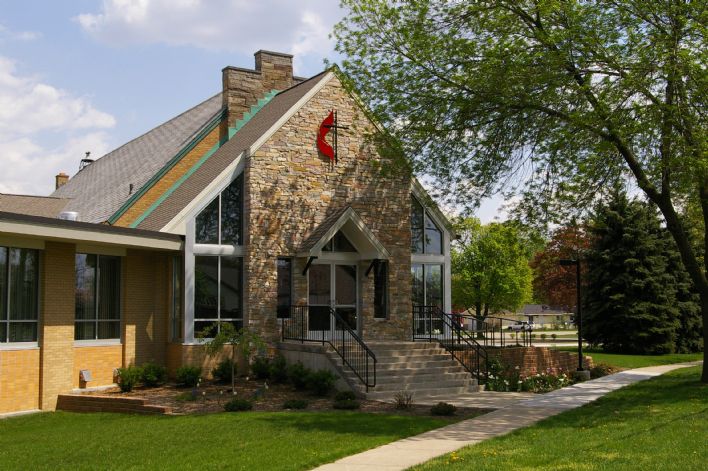
Milwood United Methodist Church occupies ancestral, traditional, and contemporary lands of the Bodwéwadmi, who have called what is now the City of Kalamazoo home since time immemorial. The Bodwéwadmi belong to the Three Fires Confederacy, along with the Odawa and the Ojibwe. The 1821 Treaty of Chicago ceded all lands in southwest Michigan, including present-day Kalamazoo, to the U.S. government and established five reservations. The Match-E-Be-Nash- She-Wish Reservation was delineated slightly northwest of the church, within the boundaries of the village of Gzigmezék. However, the five 1821 reservations were de-established under the 1827 Treaty of St. Joseph with many of the families then being forced to move to the consolidated 1827 Nottawa Sape Reservation that included the southern edge of present-day Portage. Those who lived on the 1827 Reservation include the ancestors of the modern-day Citizens of the eleven Bodwéwadmi Nations, including the Match-E-Be-Nash-She-Wish Band of Pottawatomi, Nottawaseppi Huron Band of the Potawatomi, and Pokagon Band of
Potawatomi.
There were forced removals of the Bodwéwadmi and other neshnabék (Native peoples) from present-day Michigan throughout the 1820s until the 1850s. However, after the signing of the 1833 Treaty of Chicago, the Bodwéwadmi faced systematic, forced removals from present-day Michigan throughout the 1830s until the 1850s to reservations west of the Mississippi.One of the most documented, forced removals of the Bodwéwadmi is the Trail of Death beginning on September 4, 1838, at Menominee’s village(in present-day northern Indiana) and ending on
November 4, 1838, near present-day Osawatomie, Kansas then known as the Sugar Creek Reservation. To learn more about the various removals of the Bodwéwadmi and other neshnabék (Native peoples) from the western Great Lakes region, please visit this resource: https://indigenous-chicago.org/storymap/removal-and-erasure/
Our congregation also acknowledges the systematic and historical trauma that settler colonialism created and has continued to perpetuate. Various Christian denominations have benefited from and were instrumental in the perpetuation of colonialism across this Nation. Many Christian denominations played a significant role in the establishment and operation of Native American Boarding Schools and Orphanages in the United States and Canada. Our congregation is committed to reconciliation, supporting and advocating for the sovereignty of Michigan’s Tribal Nations and the Tribal Nations who were forcibly removed from their homelands.
Potawatomi.
There were forced removals of the Bodwéwadmi and other neshnabék (Native peoples) from present-day Michigan throughout the 1820s until the 1850s. However, after the signing of the 1833 Treaty of Chicago, the Bodwéwadmi faced systematic, forced removals from present-day Michigan throughout the 1830s until the 1850s to reservations west of the Mississippi.One of the most documented, forced removals of the Bodwéwadmi is the Trail of Death beginning on September 4, 1838, at Menominee’s village(in present-day northern Indiana) and ending on
November 4, 1838, near present-day Osawatomie, Kansas then known as the Sugar Creek Reservation. To learn more about the various removals of the Bodwéwadmi and other neshnabék (Native peoples) from the western Great Lakes region, please visit this resource: https://indigenous-chicago.org/storymap/removal-and-erasure/
Our congregation also acknowledges the systematic and historical trauma that settler colonialism created and has continued to perpetuate. Various Christian denominations have benefited from and were instrumental in the perpetuation of colonialism across this Nation. Many Christian denominations played a significant role in the establishment and operation of Native American Boarding Schools and Orphanages in the United States and Canada. Our congregation is committed to reconciliation, supporting and advocating for the sovereignty of Michigan’s Tribal Nations and the Tribal Nations who were forcibly removed from their homelands.